
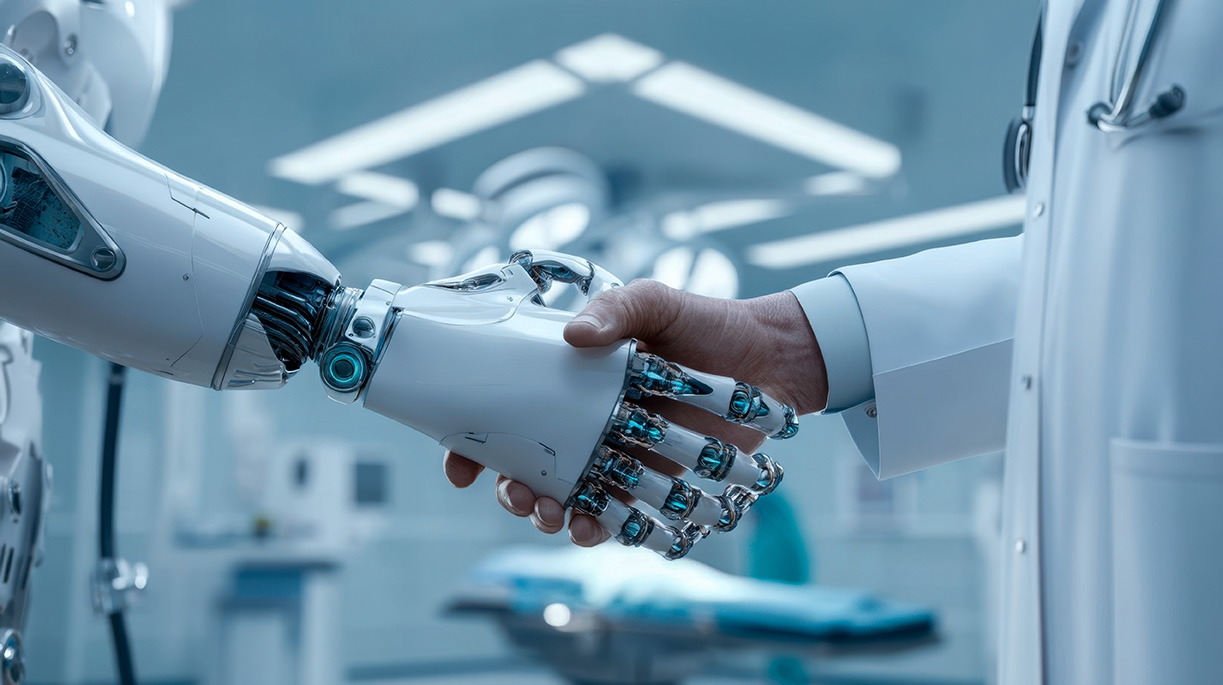
Artificial intelligence in healthcare is evolving more quickly than most people anticipated, moving from a future idea to a commonplace practice. Early adopters are demonstrating that AI isn’t coming to replace doctors, even though some clinicians still have a negative opinion of the technology due to systemic bias, privacy issues, and judgment displacement. Rather, it is here to serve as the best helper.
AI’s ability to automate routine tasks and improve diagnostic precision is freeing up healthcare professionals to focus on patient care. Here are five innovative ways that artificial intelligence is now changing the medical field.
1. Accurate Imaging and Diagnostics
Machine learning is revolutionizing dermatology, pathology, and radiology. Medical photos can now be scanned by AI models to find patterns that may be missed by the human eye, such early-stage cancer or faint stroke symptoms.
Physicians can access AI-supported insights in real time by immediately integrating these tools into their current Electronic Health Records (EHRs). The outcome? Reduced human error, quicker turnaround times, and a notable increase in diagnostic confidence.
2. Predictive Analytics: Being Ahead of the Game
Imagine if a hospital could identify a patient who was at risk of sepsis before any symptoms even showed up. It’s what predictive AI algorithms are doing. These tools estimate lengths of stay, identify high-risk patients, and even forecast the possibility of emergency transfers by examining vital signs and past data.
In addition to saving lives, this preemptive approach helps hospital staff better deploy beds and resources where they are most needed, which improves operational efficiency.
3. Resolving the Crisis in Staffing
One of the biggest challenges in contemporary healthcare is still staffing. However, real-time matching between patient demand and doctor availability is now possible thanks to AI-powered platforms.
The Nursa Intelligence Assistance (NIA) Shift Creator is a good illustration. With the help of this application, facility managers may quickly create nursing shifts that are ready to post from a voice description or a spreadsheet photo. Hospitals may ensure they are always sufficiently staffed and lessen their dependency on costly staffing firms by simplifying the scheduling process.
4. Getting Rid of the “Documentation Burden”
Time spent glued to a keyboard is one of the main factors contributing to burnout in clinicians. Clinical documentation is being automated by generative AI, which is rewriting the story.
These days, voice-to-text software can “listen” to a patient interaction and quickly create precise medical notes. The clinician just goes over, makes changes, and signs off at the end of the session. This reinstates the human connection in medicine by refocusing attention from a computer screen to the patient.
5. The Rise of Agentic AI
Agentic AI is the next frontier; these are systems that do more than just provide insights; they act. Imagine a hospital where AI uses real-time patient flow to optimize supply chain orders or automatically modify operating room scheduling.
Agentic AI, however still in its infancy, signifies a move toward “self-optimizing” capabilities. These systems can manage intricate operational duties on their own, eliminating bottlenecks and guaranteeing that the healthcare ecosystem functions as a whole.
 Staffing Stat!